
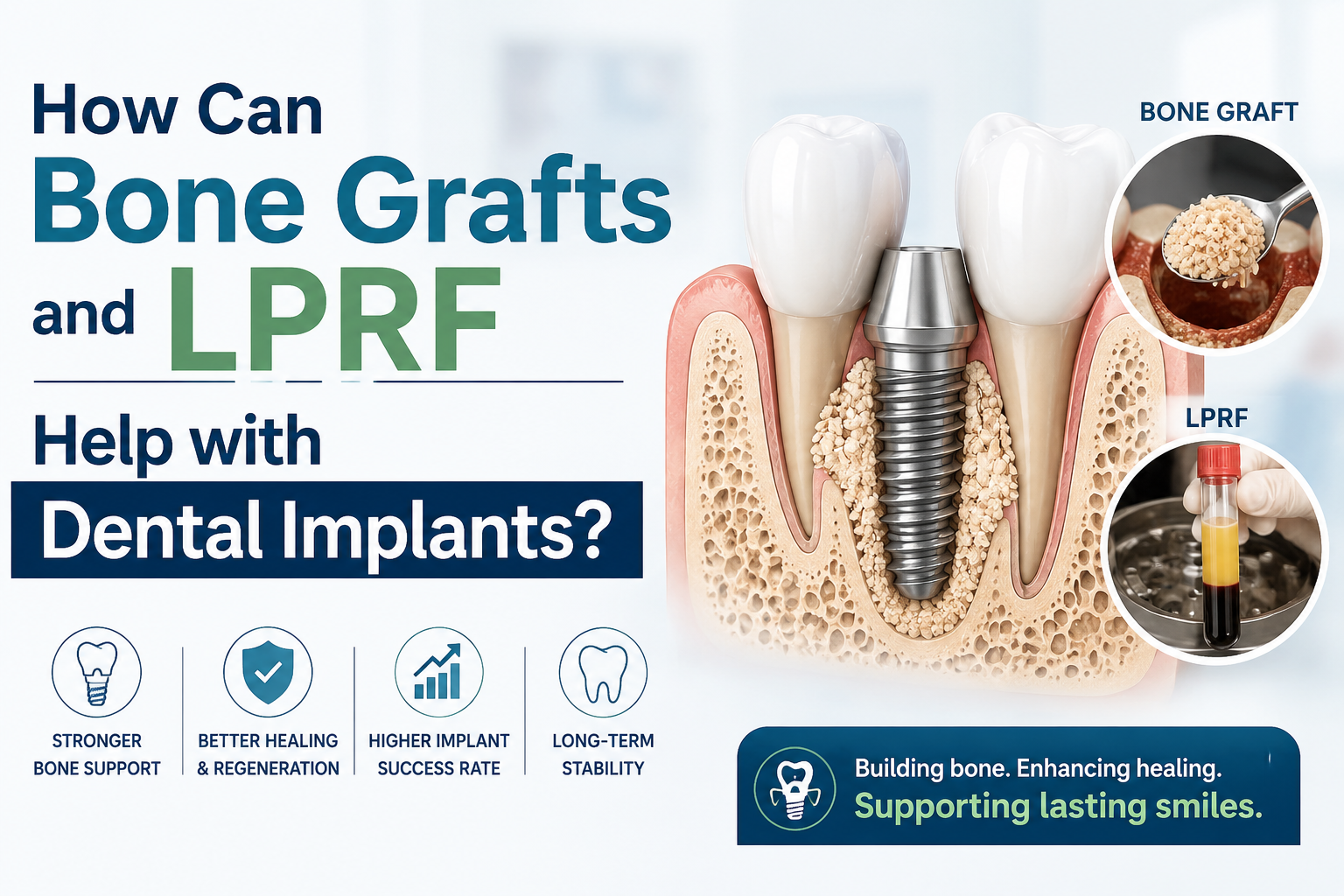
Bone grafts rebuild lost jawbone to create a solid foundation for a Dental Implant, while LPRF uses your own blood’s natural healing power to speed recovery and help that graft fuse securely with your jaw. Together, these two tools have become a genuine game-changer in modern Implant Dentistry.
If your dentist has mentioned needing a bone graft or LPRF treatment before your implant, it’s completely normal to have questions about what that actually involves. These techniques aren’t extra hurdles meant to slow you down. They’re specifically designed to give your Dental Implant Bridge or single dental implants the strongest possible foundation.
In this article, we will break down how bone grafts and LPRF work together, why an experienced implant dentist might recommend them, and what to expect throughout the process.
What Bone Grafts and LPRF Actually Do for Implant Patients
Actually, bone grafts and LPRF are solutions to two different problems that are addressed together during implant treatment. Bone grafts rebuild jawbone that’s been lost due to extraction, injury, or long-term tooth loss, while LPRF accelerates how quickly and securely that new bone heals.
Used together, these treatments give patients options that simply weren’t available years ago. With experience in both techniques, a restorative dental clinic can often help patients, especially those who were told they are not candidates for implants due to insufficient bone, thanks to steady advances in bone regeneration science.
How Bone Grafts Build a Stronger Foundation
If your natural jawbone isn’t quite enough on its own, in this case a bone graft essentially gives an implant something solid to anchor it.
Filling Voids After Tooth Loss
After a tooth is extracted or lost, the surrounding bone can shrink over time without the stimulation provided by a natural tooth root. Bone grafting for implants fills that void, replacing missing structure so there’s enough material for an implant to fuse with later.
Widening and Thickening the Jaw
Some patients simply have a naturally thinner jawbone that can’t safely support a metal implant post. Bone grafting adds width and thickness exactly where needed, creating better implant-bone support before the implant is ever placed.
Lifting the Sinus When Needed
For implants going into the upper jaw near the sinus cavities, a sinus lift procedure adds bone height in that specific area. This specialized form of jawbone restoration makes it possible to place implants in areas that would otherwise lack enough vertical bone.
How LPRF Speeds Up Healing
LPRF stands for Leukocyte-Platelet Rich Fibrin, which uses a concentration of your own blood cells and growth factors that can give a natural healing boost directly to the surgical site. You can achieve a speedy recovery and reduce swelling without introducing any synthetic materials; this is only possible with LPRF dental treatment.
Creating “Sticky Bone”
The ability of LPRF to fully mix with bone graft granules gives it the nickname “sticky bone.” This stickiness holds the graft material firmly in place during healing; that is a plus that ensures the graft stays exactly where your surgeon placed it.
Protecting the Surgical Site
LPRF not only helps speed up healing; it also acts as a natural membrane that protects it from unwanted wounds caused by bacteria and external irritants. This added layer of protection reduces the risk of infection and supports smoother, more comfortable implant healing overall.
Why Combine Bone Grafts With LPRF for Dental Implants?
Combining these two treatments addresses both structure and speed at the same time. The bone graft rebuilds what’s missing, while platelet-rich fibrin therapy helps that new material integrate faster and more securely with your natural jaw.
Patients who receive both treatments together often experience less swelling, more predictable healing, and stronger long-term bone regeneration treatment outcomes compared to bone grafting alone. It’s a big reason why many oral surgery providers now recommend pairing the two whenever possible.
What Does the Bone Grafting and Implant Process Look Like?
First, the image helps you evaluate your existing bone structure and how much grafting is needed. After this, your provider will align the dental implant preparation by placing the graft material, which is connected with LPRF, directly at the treatment site.
The time to heal depends on how much rebuilding the bone needs, but most patients wait several months before the implant is placed. This type of patience will allow the graft to fully fuse with your natural jawbone support structure, creating a stable, long-term foundation.
Who Needs Bone Grafting Before Getting a Dental Implant?
You should know it is not necessary to get a bone graft before receiving an implant, but it’s common for patients who’ve experienced significant bone loss, gum disease, or long gaps since losing a tooth. A skilled tooth replacement specialist can evaluate your jawbone density with imaging to determine if grafting is necessary.
Patients considering a cosmetic dental provider for a full smile restoration involving multiple implants are also more likely to need grafting, simply due to the added structural demands. Either way, a thorough evaluation upfront helps avoid surprises later in treatment.
Frequently Asked Questions
Do bone grafts work for implants?
Yes, bone grafting is one of the most common procedures used to prepare a site for dental implants, especially after tooth loss. Grafts can be used in block or particulate form, depending on the size and shape of the area to be rebuilt.
How long will a bone graft last without an implant?
A bone graft generally stays stable for about 6 to 12 months without an implant before the new bone starts to shrink. The graft needs the pressure from chewing, provided by an implant or natural tooth, to stay strong over time.
Will gums grow over a bone graft?
Yes, gum tissue typically heals and closes over a bone graft site within the first few weeks. However, a bone graft only rebuilds jawbone, so it won’t reverse existing gum recession or restore a higher gum line.
Is LPRF treatment painful?
LPRF itself involves a simple blood draw, similar to routine bloodwork, so the process adds minimal discomfort to your procedure. Most patients find that LPRF actually reduces overall post-surgical discomfort by supporting faster healing.
How long does the entire bone graft and implant process take?
The full process can take anywhere from a few months to nearly a year, depending on how much bone needs rebuilding and individual healing time. Your provider can give you a personalized timeline after an initial evaluation.
Does insurance cover bone grafting for dental implants?
Coverage varies widely by insurance plan, and some policies cover bone grafting as a medically necessary procedure while others do not. It’s worth confirming your specific benefits with your provider before starting treatment.
Final Thoughts
By combining all the information, keep in mind that bone grafts and LPRF work together to provide Dental Implant patients with a stronger base and a quicker recovery, even when significant bone grafting is needed beforehand. From filling voids to speeding up healing, these tools have made implants accessible to far more patients than in years past.
At Gentle Teeth & Braces, the team evaluates your jawbone structure and healthy gums before recommending the right combination of bone grafting and LPRF for your specific case. Every treatment plan is built around long-term implant stability and results you can count on.
If you’ve been told you need bone grafting before getting an implant, schedule a consultation with Gentle Teeth & Braces today to discuss your options.